Listen to: All the Birds Are Gone
A song of silence, grief, and quiet defiance
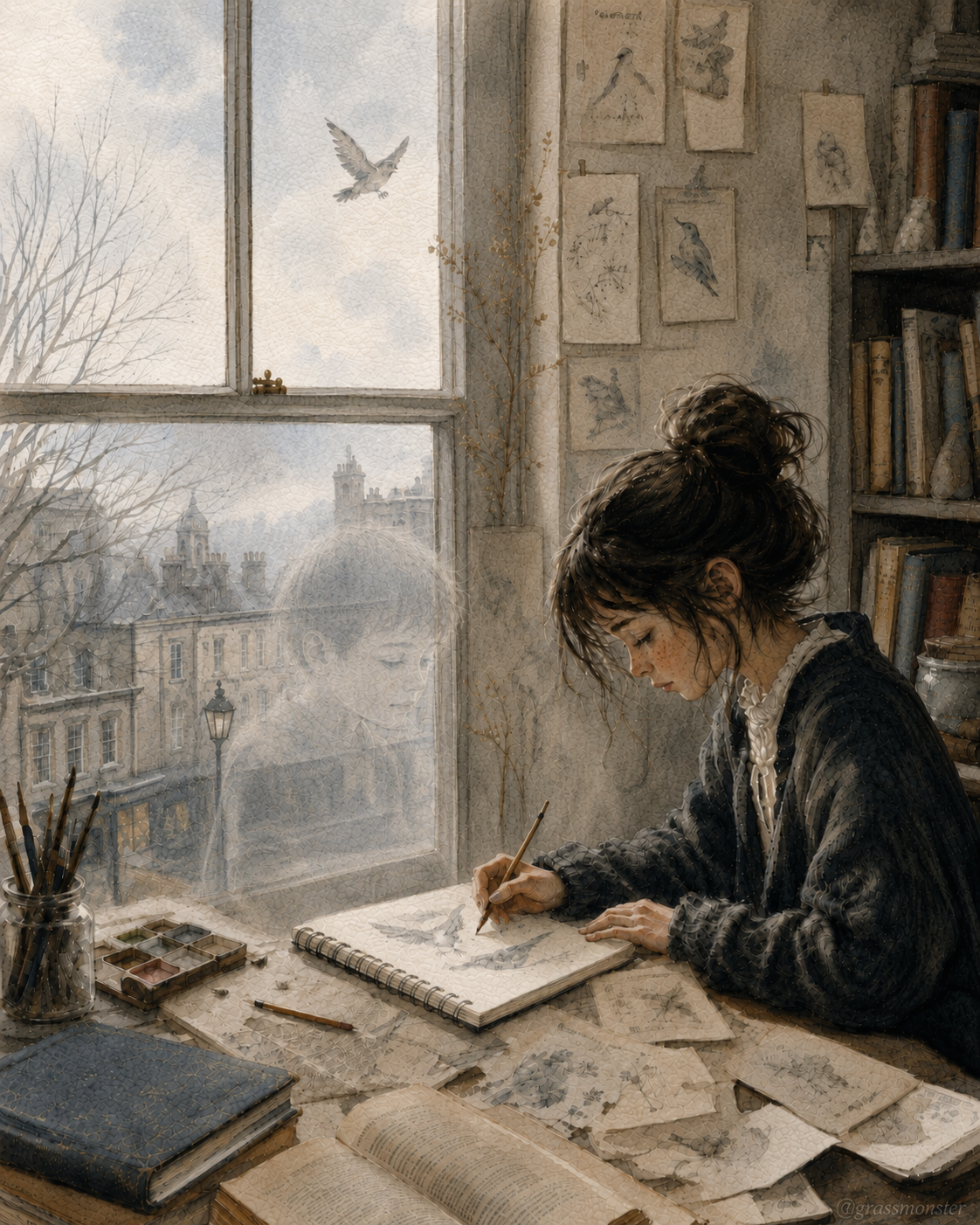 All the Birds Are Gone is a song about the terrible silence that follows loss. It does not begin with noise or spectacle. It begins in a world where the sky has emptied, where friendship has failed, where childhood has become unsafe, and where the voice of a young girl has been driven inward.
At the centre of the song is Jenny, a girl caught between childhood and the harder knowledge of the world. She is not yet grown, but she has already learned too much about betrayal, grief, and loneliness. The song follows her after the laughter of others has turned cruel, and after the places that should have protected her have instead cast her out.
The vanished birds become the great image of the song. They are more than birds. They are trust, speech, music, innocence, and the ordinary chatter of belonging. When they disappear, the world does not simply become quiet. It becomes accused by its own quietness.
The cruelty of false belonging
The first wound in the song is betrayal. Jenny once lived among halls where laughter seemed light and harmless, like sparrows fluttering in the rafters. But the laughter changes. What once sounded like friendship becomes mockery. Promises of belonging become thin veils for spite.
This is one of the sharpest truths in the song. Loneliness is painful, but false belonging can be worse. To be invited close and then made an object of cruelty is to learn that shelter can become a trap.
All the Birds Are Gone understands this kind of harm with great tenderness. It does not make the cruelty grand. It keeps it painfully recognisable: giggles, whispers, closed doors, names left unspoken, and the sudden knowledge that a room full of people can be the loneliest place in the world.
The city without welcome
When Jenny is thrust into the street, the city offers no comfort. Its lamps are too weak to warm her. Its alleys hold only wind. The world feels unsoftened by pity, as if winter itself has entered the human heart.
The setting matters because it reflects her inner life. The streets are not merely background. They become part of the silence. Every cold lamp, every narrow alley, every gust of bitter air deepens the feeling that she has been pushed outside the circle of care.
Yet even here, the song does not surrender her completely to despair. Jenny walks. She carries herself through the city. She is wounded, but not erased. That distinction gives the song its first quiet sign of strength.
The silence of loss
The silence in All the Birds Are Gone is not empty. It is crowded with what has been taken. Jenny carries an unread book in her satchel, but a heavier book sits inside her heart: the book of things she cannot yet say.
Her words have fled her like migrating birds from a barren field. That image is central to the song's emotional force. It shows how grief can take language away. A person may still breathe, walk, listen, and remember, yet find that speech itself has gone into hiding.
The lost birds are therefore the lost voice. They are the vanished chorus of youth, the broken trust of friendship, and the absence left by death. Their disappearance leaves behind a stillness that cuts rather than comforts.
A brother carried in memory
The death of Jenny's brother deepens the song's sorrow. He is remembered not through grand description, but through tenderness: breath, winter, lullaby, and the ache of a promise cut short.
She carries him in thought as she walks through the bitter city. The world may not notice him, and it may not notice her grief, but she carries him faithfully. That is one of the most moving parts of the song. Mourning does not need an audience to be true.
In this way, Jenny becomes a quiet bearer of memory. She is young, but she carries what others cannot see. Her silence is not emptiness. It is full of love, pain, and the effort of holding someone close after the world has taken them away.
The room above the bookshop
The room above the weary bookshop gives the song its first real sanctuary. It is not a palace of rescue. It is modest, musty, and quiet. But it asks nothing false of her, and that is enough.
The books become silent counsellors. They do not mock. They do not demand a performance. They do not press her to explain what she cannot yet speak. They simply remain, surrounding her with the patience of old pages.
This is where the song turns. Jenny does not heal in one dramatic moment. She begins with something smaller: a scrap of paper, a trembling hand, the outline of wings. Creation enters quietly, almost shyly, but once it enters, the silence begins to change.
Drawing the vanished birds
Jenny cannot summon the birds back into the sky, but she can draw them. That is the act of defiance at the heart of the song. The world has taken sound from her, so she answers with line, shape, memory, and imagination.
Each bird she draws becomes a small refusal. It says that absence is not the final authority. It says that what has vanished may still leave an image, and that an image may become a bridge back towards voice.
This is not loud rebellion. There is no speech from courthouse steps, no public victory, no sudden chorus of applause. It is the harder, quieter rebellion of someone who chooses to make meaning after meaning has been stripped away.
The return of voice
As Jenny draws, she begins to whisper again. Not in the careless chatter of the life that betrayed her, and not as the girl she once was. The voice that returns is altered. It has passed through grief, solitude, and silence.
That is why the song is not simply about recovering what was lost. Some losses cannot be undone. Jenny does not return to the same sky. She creates a new one.
The birds she draws are not replacements for the birds that vanished. They are witnesses. They are proof that imagination can survive cruelty, and that a silenced life can begin to speak through another language before words return.
The sound of the song
All the Birds Are Gone needs an arrangement that respects quietness. It should not rush to comfort the listener too quickly. The song's strength lies in allowing silence to be felt before turning it into creation.
The music should carry winter air, narrow streets, bookshop dust, and the fragile motion of pencil on paper. It should feel intimate, as if the listener is close enough to hear breath return to someone who had almost forgotten how to speak.
In the Jenny Toledo folk project, the recording gives All the Birds Are Gone a consistent vocal and visual atmosphere, but the centre remains the human-authored song itself: its grief, its compassion, its image of vanished birds, and its belief that creation can become a form of survival.
Why this song matters
All the Birds Are Gone matters because it treats silence seriously. It understands that silence can be caused by cruelty, grief, isolation, and shock. But it also understands that silence need not remain a prison.
The song speaks to anyone who has lost their voice in the presence of pain. It gives dignity to the person who cannot immediately explain what has happened to them. It says that healing may begin not with speech, but with one small act of making.
There is deep hope in that idea. The birds may be gone from the sky, but the hand can still draw wings. The world may have become silent, but silence itself can become a canvas.
Connection to The Threadbare Tapes
Within The Threadbare Tapes, All the Birds Are Gone stands as a song of grief carried quietly, and of a young life learning to reclaim itself through creation. The album is full of lives under pressure: the exiled, the indebted, the hunted, the grieving, the visionary, the labouring, the haunted, and the defiant.
Jenny belongs among them because she too is marked by forces larger than herself. She is wounded by betrayal, by bereavement, and by a world that offers too little mercy. Yet she finds a way to answer without becoming cruel herself.
The Threadbare Tapes is concerned with what remains after loss. In this song, what remains is a hand, a scrap of paper, a remembered bird, and the first fragile return of voice.
All the Birds Are Gone is therefore not only a song of silence. It is a song of witness, art, and defiance. It reminds us that when the sky is empty, the soul may still remember how to draw flight.
Keywords: Jenny Toledo, Jenny Toledo folk project, All the Birds Are Gone, The Threadbare Tapes, folk music reflection, song about silence, grief and art, young girl drawing birds, vanished birds, betrayal and isolation, bookshop sanctuary, defiance through creation, acoustic folk ballad, human songwriting, folk storytelling, Mairtin Olubaigh, SYME Music Publishing, Hengest Records