Listen to: Devil Red
A fox-red song of pursuit and survival
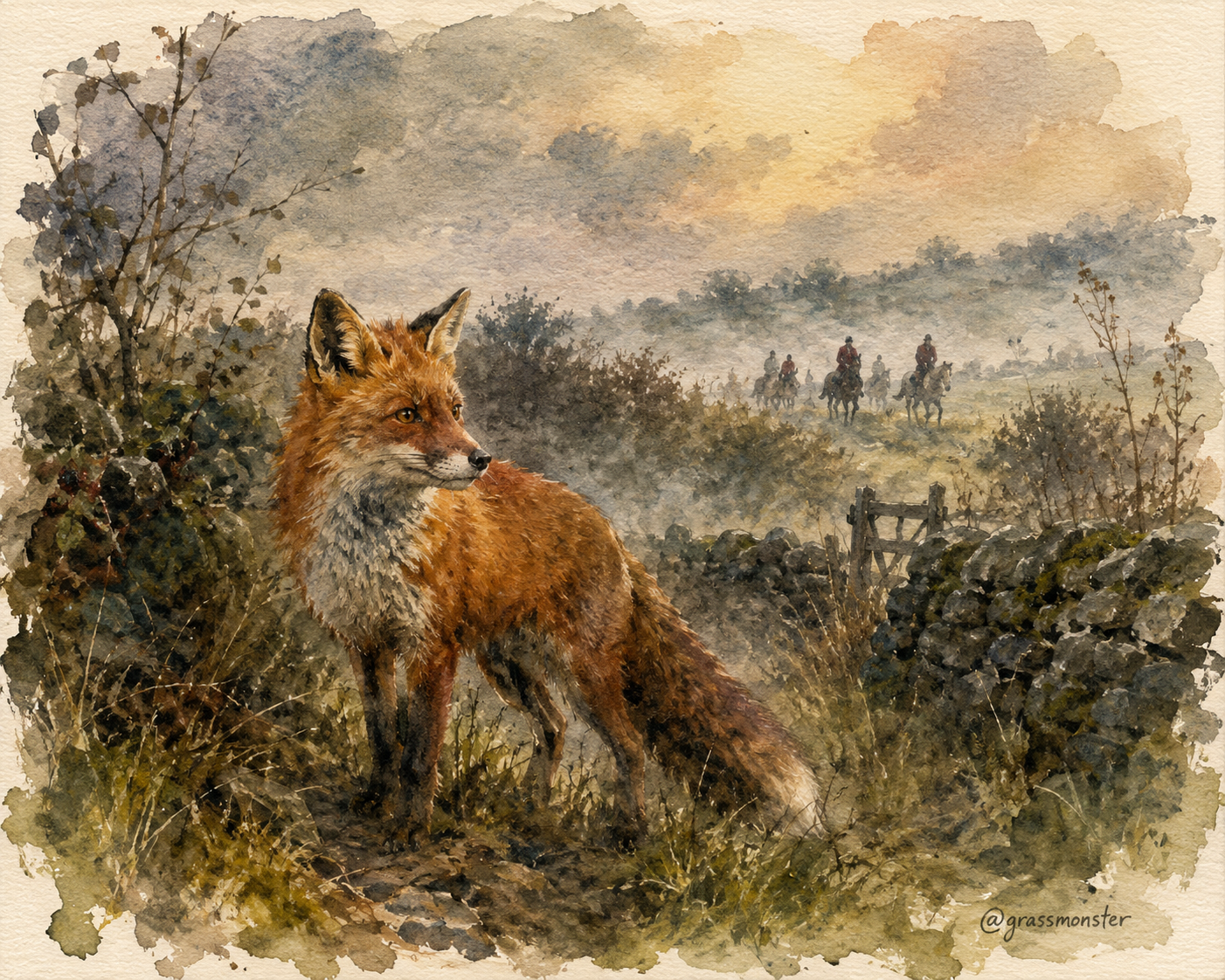 Devil Red moves through the mist like a warning. It is a song of chase, instinct, danger, and judgement, built around the image of the fox: bright, hunted, clever, and alive with the old wild intelligence of the countryside.
The title carries a double meaning. Devil Red may be the colour of the fox in the hedge, but it may also be the colour placed upon it by those who fear or despise what they cannot command. The fox becomes more than an animal. It becomes a figure of suspicion, beauty, cunning, and survival.
At first glance, this may seem like a song about pursuit. But beneath the surface it asks a sharper question: who is really the devil in the field? The creature trying to live, or the crowd that dresses up the chase as sport, custom, or moral right?
The hunted life
The fox in Devil Red is not presented as a simple symbol. It is alive, watchful, and pressed by danger. Its world is made of wet grass, low hedgerows, broken light, breath in the cold air, and the sudden crack of distant movement.
There is fear in the song, but also dignity. The fox does not plead. It moves. It listens. It survives by knowing the land better than those who thunder across it. Every ditch, gate, hollow, and field edge becomes part of its memory.
That is where the song finds its emotional force. The hunted creature is not helpless. It carries a fierce knowledge of its own world. It is vulnerable, but not empty. Cornered, but not conquered.
Country beauty and country cruelty
Devil Red understands that the countryside is not one thing. It can be beautiful and brutal in the same breath. Morning mist can soften a valley while danger moves through it. A field can look peaceful from a distance while fear is running through the grass.
The song does not need to shout its judgement. It lets the contrast speak. There is the loveliness of the landscape, and there is the violence that can be hidden inside tradition. There is the beauty of the fox, and there is the human appetite for turning another creature's fear into ceremony.
This gives the song its moral unease. It is not simply sentimental. It is troubled. It knows that old customs often defend themselves by sounding noble, even when something cruel sits at the centre.
The colour red
Red runs through the song like a thread. It is the fox's coat, the warning in the title, the heat of pursuit, the blood-memory of the land, and the colour of accusation.
To call something devil red is to brand it. It is to decide what it is before listening, before looking closely, before asking whether the name tells the truth. The song quietly resists that branding. It asks the listener to see the fox not as a villain, but as a living presence.
In that sense, Devil Red becomes a song about the names society gives to what it wants to chase away. The fox is only one version of that story. There are human echoes too: the outsider, the scapegoat, the misread figure at the edge of the field.
The sound of the song
The arrangement should carry movement. Not panic, but movement. A sense of breath, footfall, distance, and changing ground. The song needs space for the fox to run and for the listener to feel the field opening and closing around it.
Acoustic textures suit this world: strings, folk rhythm, and a voice held close enough to feel like witness rather than performance. The song should not sound like a lecture. It should sound like someone has stood at the edge of the mist and seen something that cannot be forgotten.
In the Jenny Toledo folk project, the recording gives Devil Red a consistent vocal and visual atmosphere, but the centre remains the human-authored song itself: its story, its restraint, its unease, and its compassion for the hunted life.
Why this song matters
Devil Red matters because it asks the listener to look again at the creature being chased. Folk music has always had room for animals, omens, fields, weather, and old moral questions. This song belongs to that line.
It is not merely about a fox. It is about pursuit itself. It is about the thrill of the crowd, the silence of the hunted, and the dangerous ease with which a living thing can be turned into a target.
The song also carries a wider human meaning. Many lives are marked by being misunderstood, named wrongly, or forced to run from the judgement of others. Devil Red allows that meaning to sit quietly beneath the surface, without making the fox disappear into metaphor.
Connection to The Threadbare Tapes
As the third track, Devil Red widens the world of The Threadbare Tapes. After The Threadbare Path gives us exile and chosen love, and Debtors Waltz gives us debt and judgement, this song moves into the open country, where beauty and danger travel together.
It brings the album closer to the old folk tradition of animal song and moral fable. Yet it avoids becoming a simple lesson. Its strength lies in atmosphere: mist, red fur, distant riders, breath, fear, and the question of who gets to decide what is wicked.
The Threadbare Tapes is full of lives under pressure. In Devil Red, that pressure belongs to the fox. But the listener knows, almost without being told, that the song is also about every life pursued by power, suspicion, and old cruelty dressed in fine clothes.
Devil Red is therefore a song of pursuit, but also of witness. It stands with the hunted long enough for the listener to feel the chase from the other side.
Keywords: Jenny Toledo, Jenny Toledo folk project, Devil Red, The Threadbare Tapes, folk music reflection, fox song, hunted fox, country folk ballad, animal symbolism in folk music, moral folk song, acoustic folk storytelling, human songwriting, countryside cruelty, pursuit and survival, Mairtin Olubaigh, SYME Music Publishing, Hengest Records